Customer Inquiry Analysis and Response Generation Automation: AI Customer Center
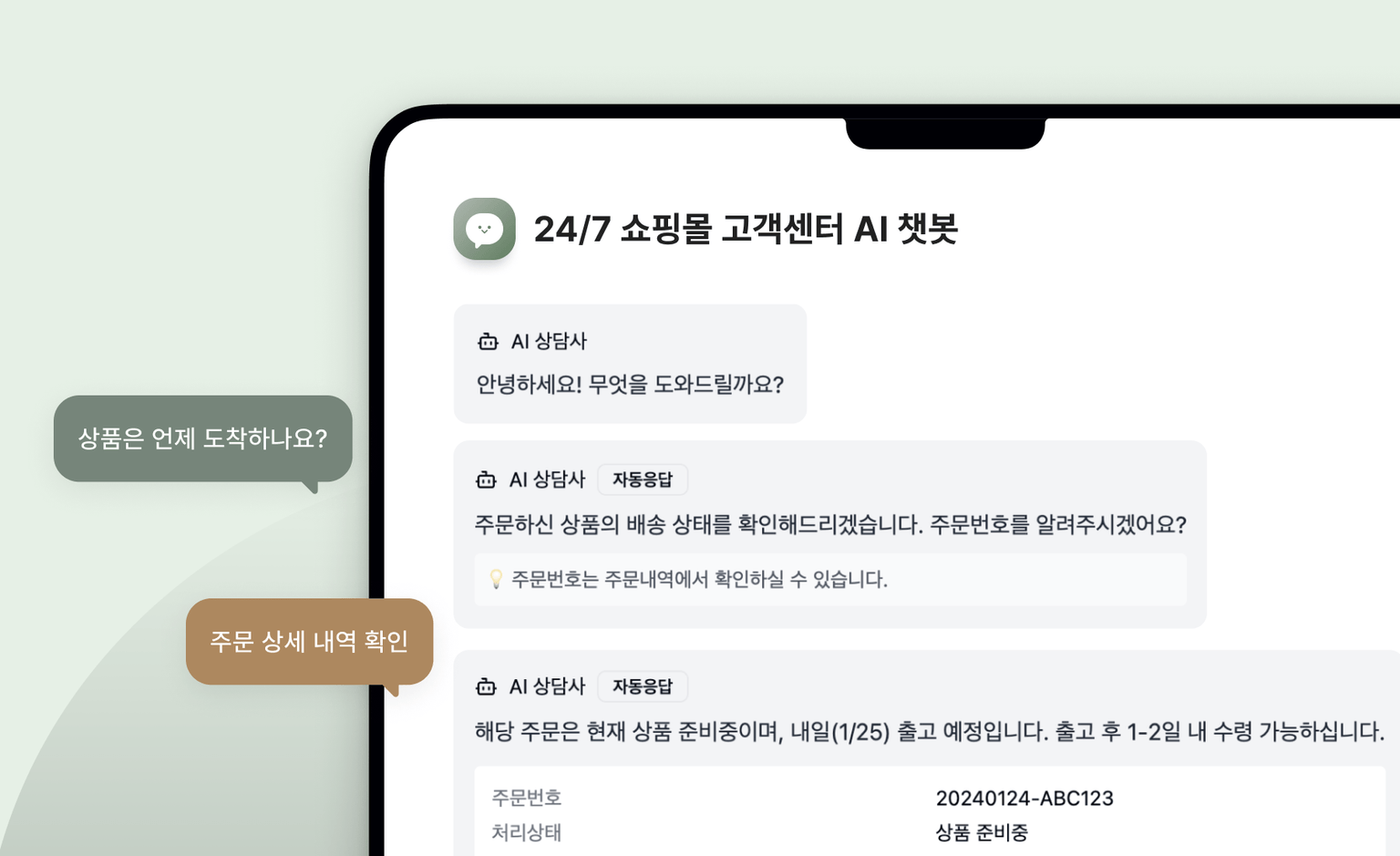
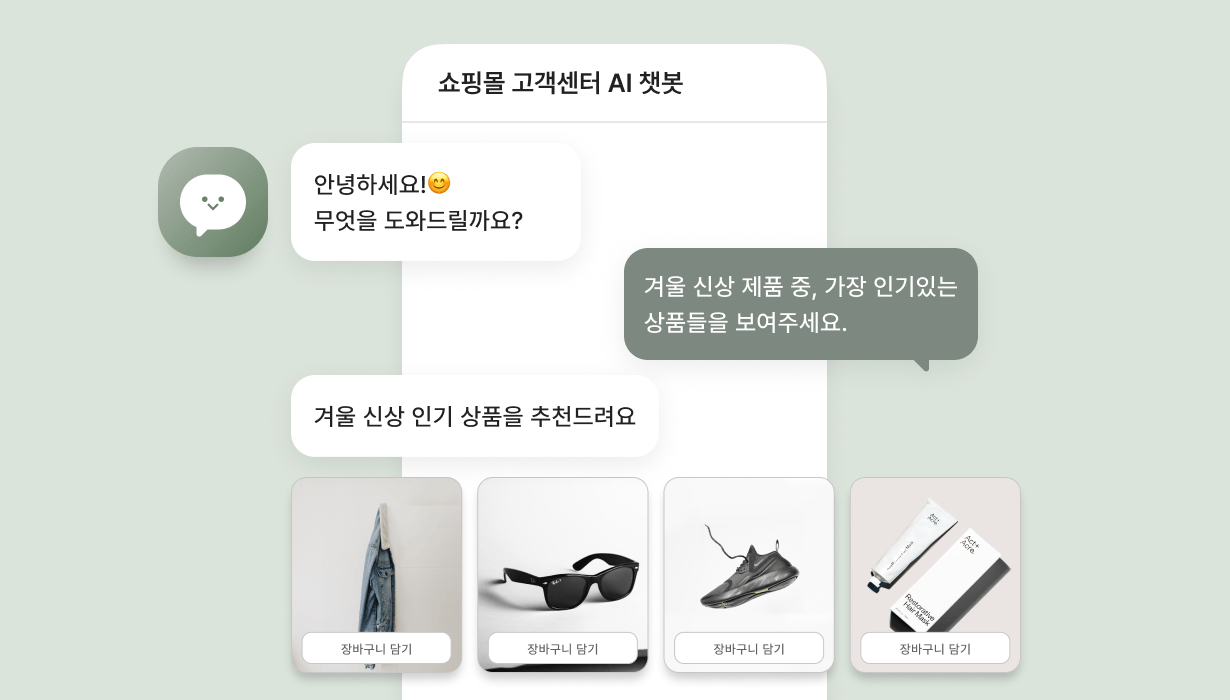
A system that builds a chatbot-style customer center to efficiently handle FAQs and option/chat-type inquiries.
Background
- The client operating a large shopping mall had at least 7 customer service agents directly responding to various customer inquiries daily. On high-volume days or when complex inquiries extended consultation time, customer satisfaction was significantly declining.
- Although FAQs and inquiry boards were utilized, users preferred chat-based consultations. However, the existing KakaoTalk channel-based option selection customer center had relatively low customer satisfaction.
- The client was continuously expanding the shopping mall, meaning customer inquiries would increase further, requiring an effective solution.
- Hiring additional customer service staff for temporarily increasing inquiries was burdensome, and utilizing existing staff for other tasks would be more effective.
Project Description
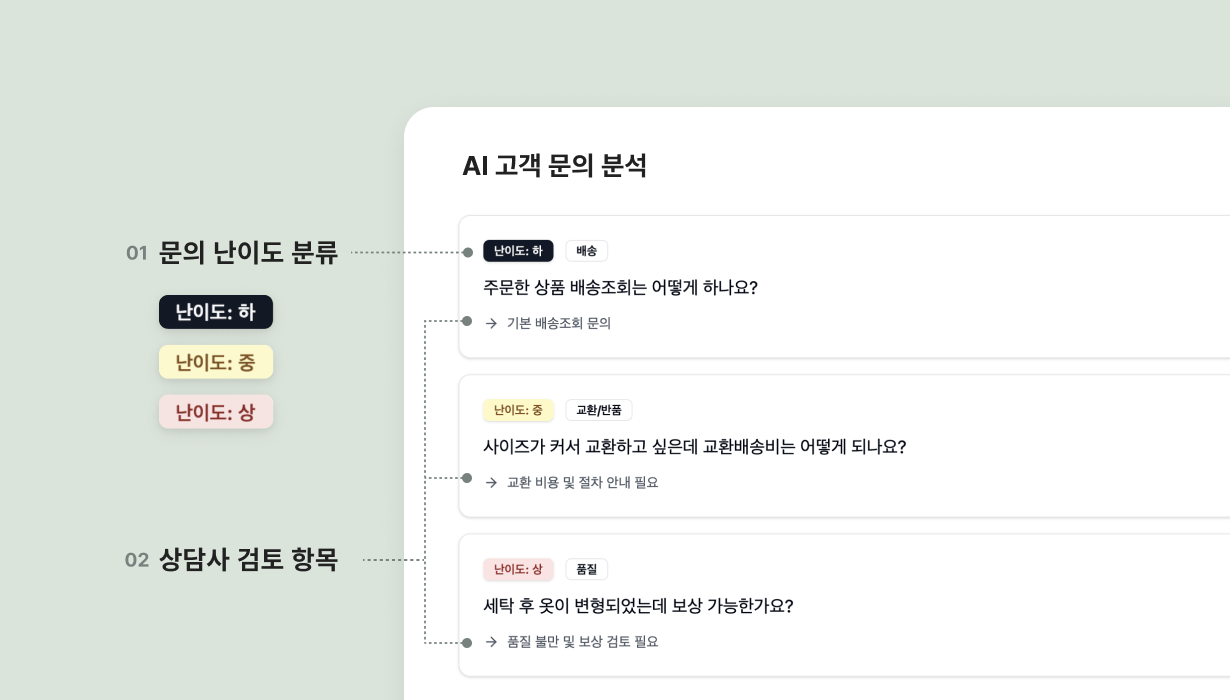
- Past Customer Inquiry Analysis and Key Scenario Identification
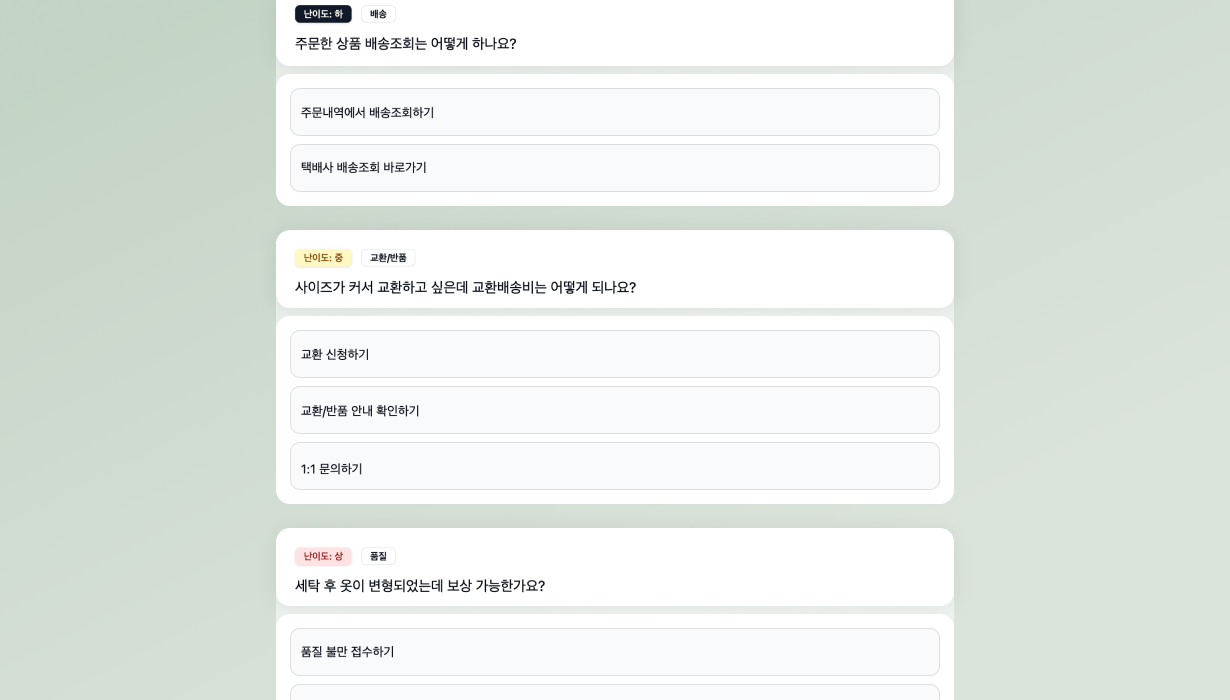
- Categorized FAQs and situations requiring/not requiring chat
- Organized and classified newly needed response situations
- User Interface Design (Including Design)
- Another key aspect of AI chatbot projects is "efficiently exchanging Input/Output within a defined chat space" - performed scenario analysis and design work for this
- Backend System Design and Development
- Determined which generative AI solution to use and when/how to call APIs
- Comprehensive design and implementation of how to connect with shopping mall member/product databases
- Question-Answer Database Construction
- Built Q&A DB for FAQs, option/chat-type inquiries classified earlier
- Determined and executed cost-efficient service operations
- Real Agent and AI Chatbot Collaboration Scenario Design and Implementation
- Even with AI chatbots, real agent intervention is needed in certain exception situations
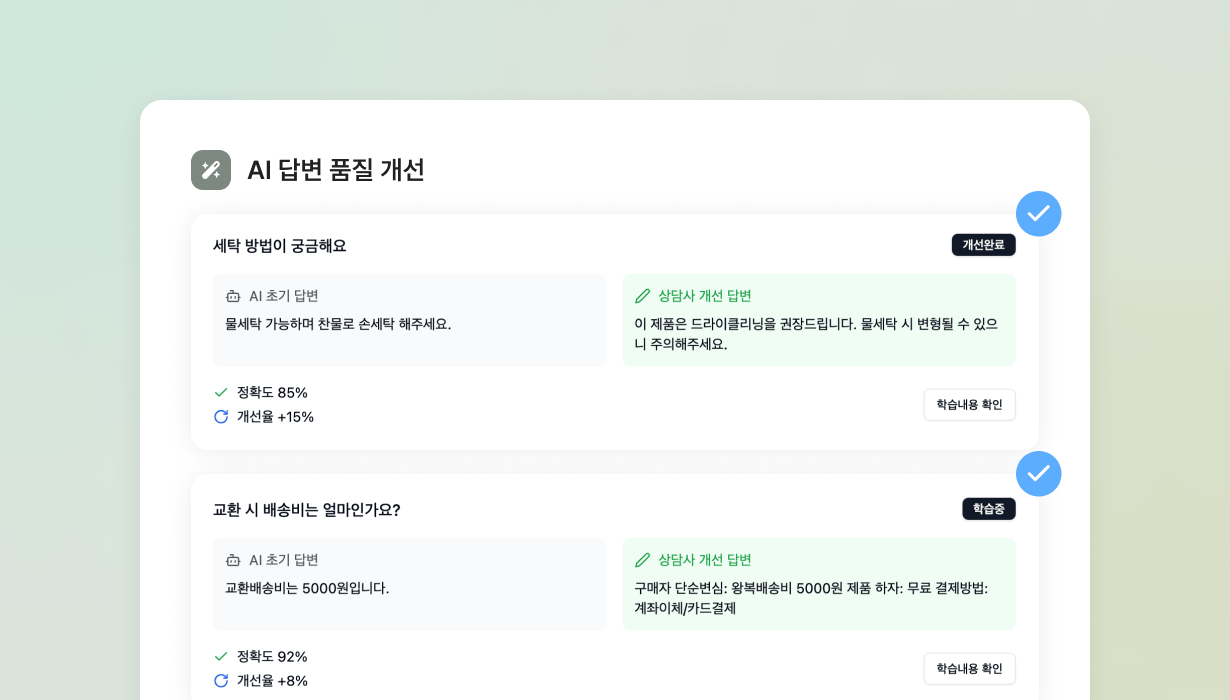
- Implemented features for real agents to collaborate with AI chatbot for quality management of early responses
- Continuous Learning Updates
- Performed ongoing Prompt Engineering and Fine Tuning for response optimization
Key Achievements
- Customer inquiries that were only handled during agent working hours (Mon-Fri, 10AM-5PM) can now be processed regardless of day/time, greatly improving user satisfaction
- With only a few given options like "Order inquiry," "Shipping policy," "Payment methods," the probability of customers finding desired answers was very low. The chatbot-style customer center achieved 80-90% "first response" completion rate
- (10-20% of inquiries were directly handled by agents while strengthening chatbot capabilities)
- Handled more inquiries with only 20-30% of the human resources previously allocated for customer service
- Continuously updated Vector DB (RAG) after commercialization to improve response rates
Development Process
- Step 1: Service Requirements Definition
- Established detailed customer center requirements (including AI response and agent collaboration features)
- Collected sales policies, shipping policies, FAQs
- Organized and cleaned existing inquiry/response records
- Step 2: User Scenario Confirmation
- Confirmed chatbot response scenarios (flow)
- Basic Prompt Engineering design
- Confirmed chatbot response feedback verification and human agent collaboration methods
- Step 3: User Interface and Web UX Design
- Reviewed and adjusted service requirements and user scenarios
- Determined User Interface capable of handling scenarios
- Designed Web Application features
- Step 4: Architecture Design, AI Solution Integration
- Designed backend system and database configuration
- Built RAG system using VectorDB (Weaviate)
- Integrated LLMs including OpenAI, Gemini
- Step 5: Full Feature Development and Commercialization
- Front-End development
- Back-End development
- Collected user feedback through commercialization
- Step 6: Continuous Tuning (AI)
- Prompt Engineering to improve response rates
- Updates based on user feedback analysis
Our Strengths
- Development company with 10+ years of experience
- Data/algorithm experts (Seoul National University ECE Bachelor's/Master's graduates)
- Rich experience planning/designing/developing/commercializing "conversational chatbot" service with 1.2+ million downloads
- Proven capability in user analysis and excellent UX/UI, as demonstrated by Google Play Best Award (selected once per year by Google)
- Extensive project experience in automation/content generation using generative AI solutions