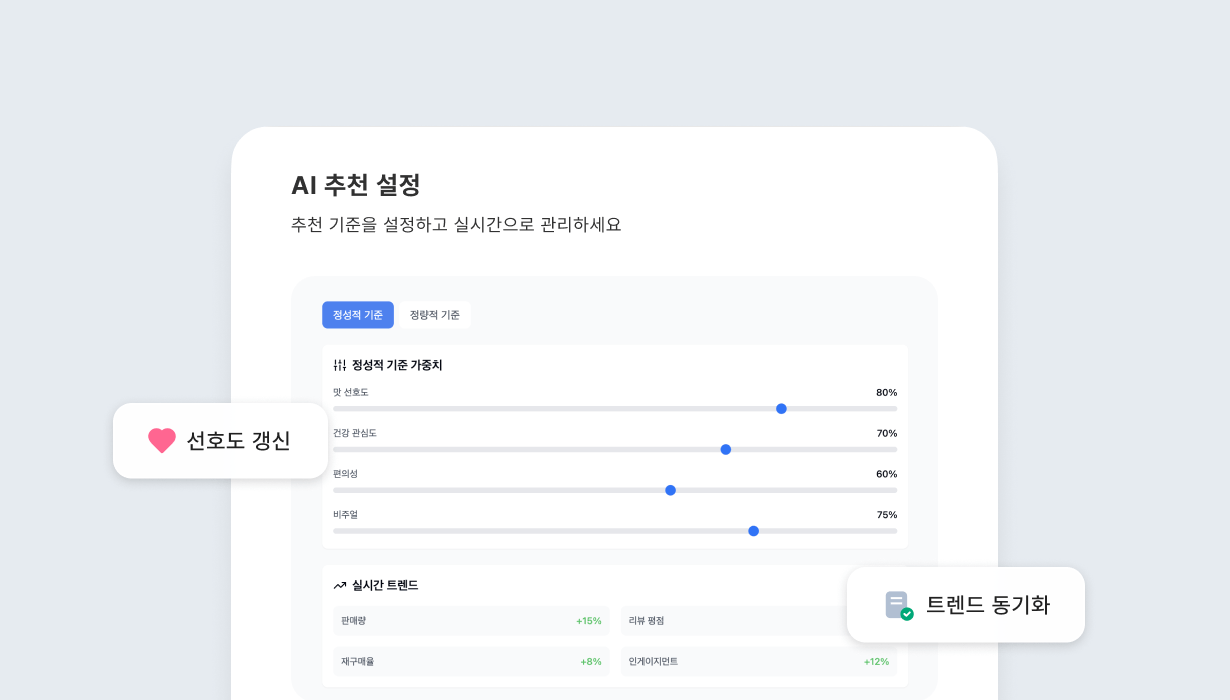
Personalized Product Recommendation and Purchase Conversion
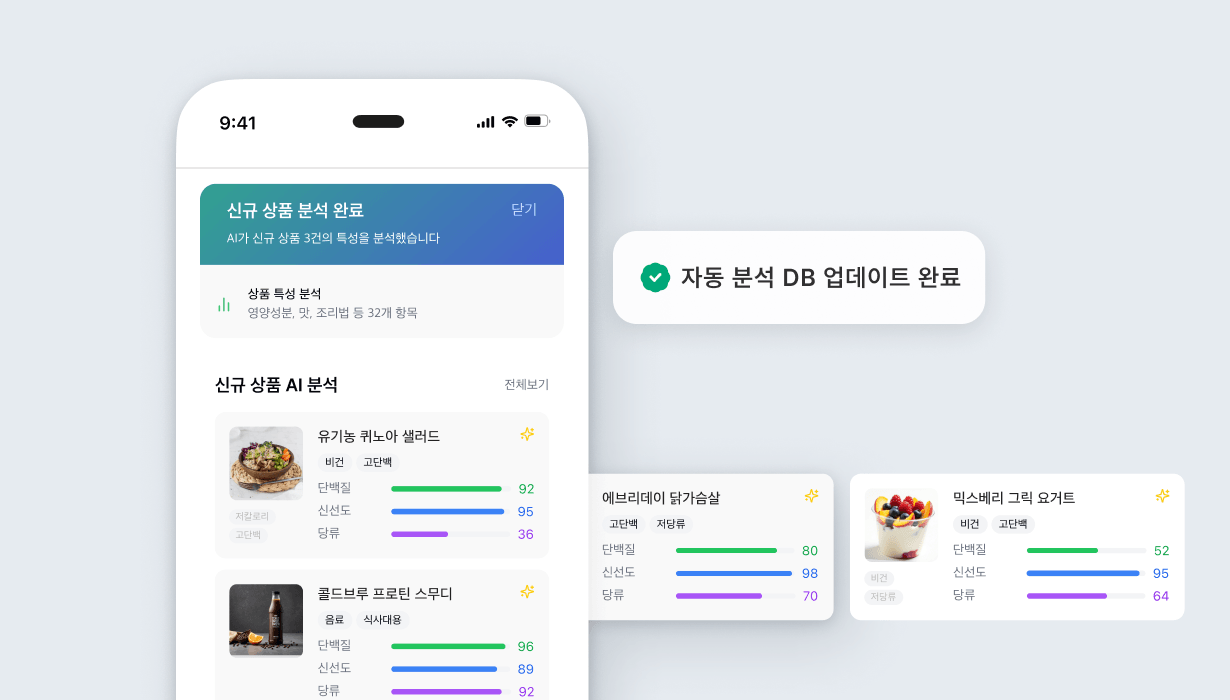
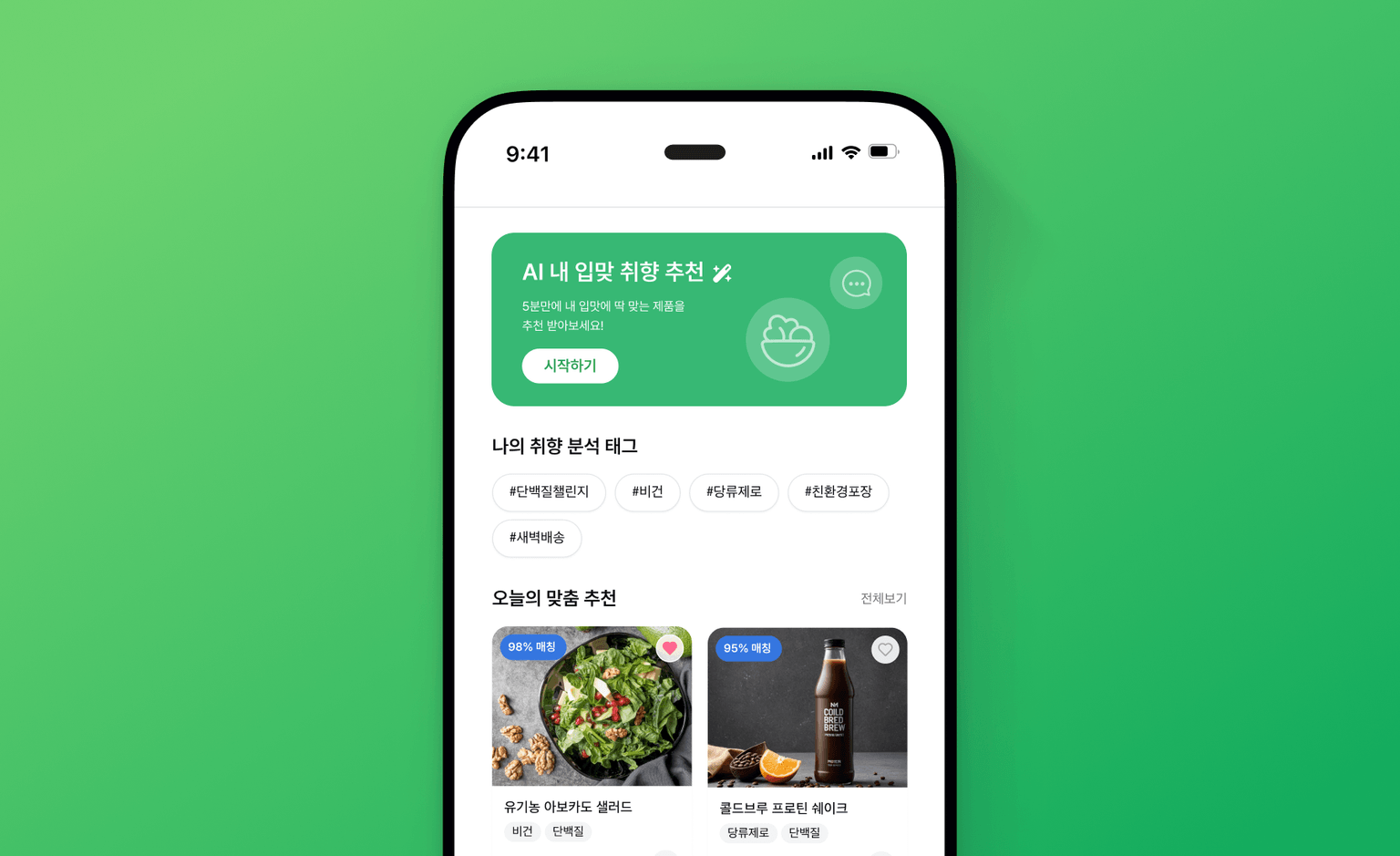
An AI solution that analyzes diverse user preferences and requirements to recommend personalized products for a shopping mall selling various food items targeting women in their 20s-30s.
Background
- Finding suitable products in a shopping mall is always a tedious and time-consuming task for users. The more product variety, the greater the inconvenience, requiring a solution.
- Users have different criteria for selecting products, considering both quantitative criteria (performance-based) and qualitative criteria (taste and preferences), adding complexity to recommendation algorithms.
- By learning quantitative and qualitative criteria and deriving products from candidate groups that best satisfy these criteria, AI could significantly improve recommendation accuracy.
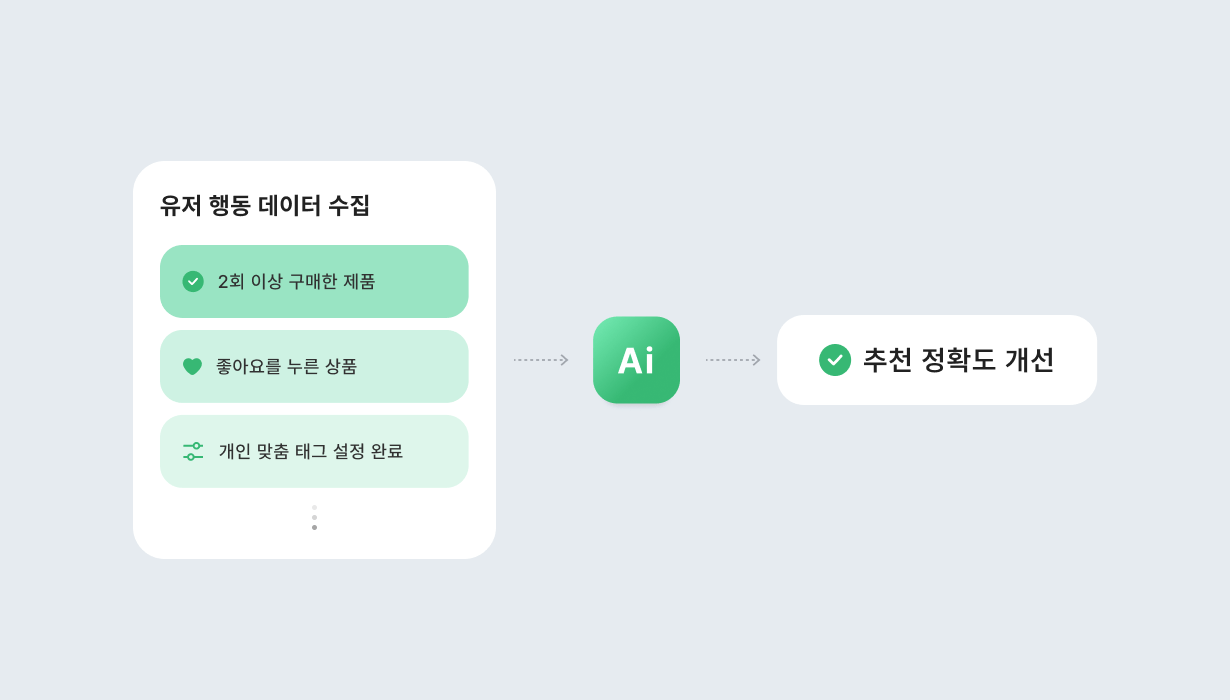
- Since users could input their preference information in certain situations, we could progressively improve recommendation accuracy.
Project Description
- Planned/designed/developed/commercialized for a shopping mall selling various food items to women in their 20s-30s
- With women in their 20s-30s as main customers, requirements for taste/preferences/packaging/price range varied greatly, making accurate product recommendations crucial
- For some customers, bundling multiple products into packages with slight discounts increased purchase conversion rates. AI was also utilized for personalized package configuration.
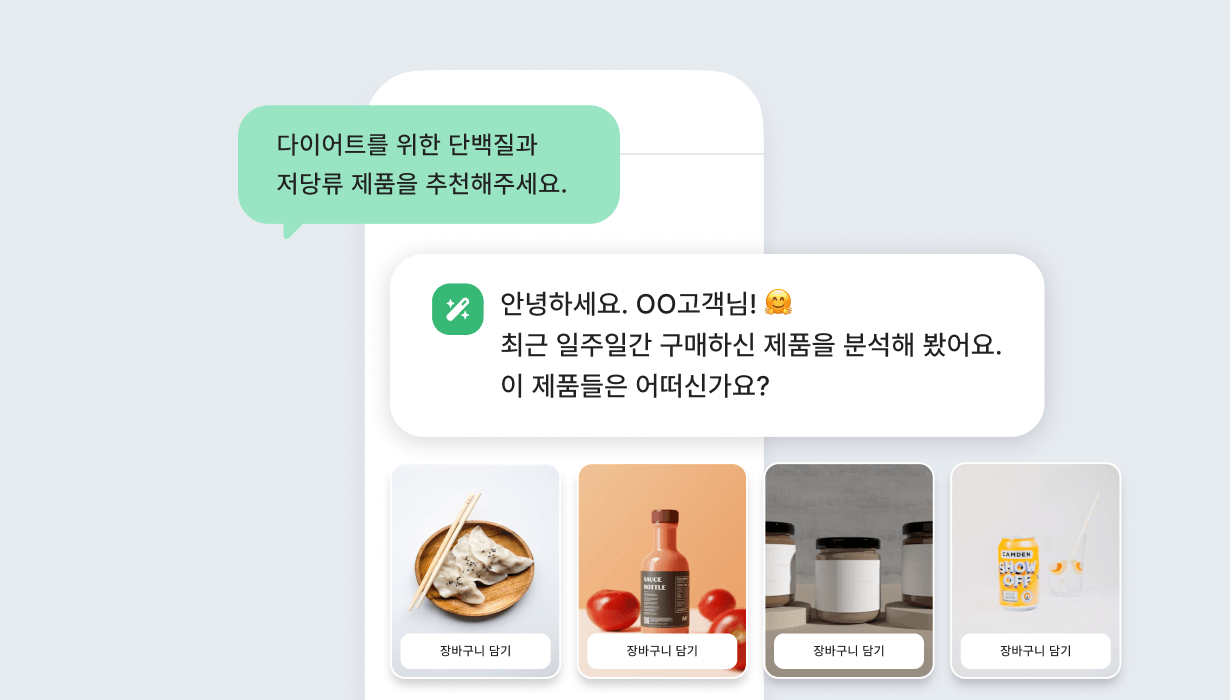
- To understand customer preferences, we acquired information needed for recommendations through simple Q&A conversations. Planning and design for efficient recommendation questions and priority criteria when customer requirements conflict was also crucial.
- High user satisfaction was achieved by considering both i) quantitative information and criteria and ii) qualitative characteristics and tendencies in personalized recommendations.
Key Achievements
After applying personalized recommendations:
- Product page view rate increased approximately 10x
- Purchase process entry rate increased approximately 7x
- Purchase success rate increased approximately 5x
- Total revenue also increased approximately 5x
Additional achievements:
- Personalized recommendations enabled introducing more products to users, increasing displayable product area by 3-4x, removing burden from continuously expanding product lines
- With "Algorithm/Rule-based" approaches, when i) factors to consider for recommendations change or ii) quantitative/qualitative criteria values change, the algorithm itself needed modification, requiring separate resource allocation. With AI solutions, updates could be done simply and easily
Development Process
- Step 1: Service Requirements Definition
- Designed user analysis and preference data collection methods
- Defined quantitative/qualitative criteria for recommendation algorithms
- Step 2: User Scenario Confirmation
- Designed preference identification scenarios through Q&A conversations
- Established recommendation result display and feedback collection flow
- Step 3: Recommendation Algorithm Design
- Integrated quantitative criteria (price, nutrients) with qualitative criteria (taste, preferences)
- Designed data structure for AI model training
- Step 4: Architecture Design and Development
- Designed backend system and database configuration
- AI recommendation engine integration and API development
- Step 5: Front-End, BackEnd Development
- Flutter-based app development
- Kotlin, SpringBoot-based backend development
- Step 6: Commercialization and Performance Measurement
- Validated recommendation effectiveness through A/B testing
- Continuous improvement based on user feedback
Our Strengths
- Development company with 10+ years of experience
- Experience applying "content recommendation algorithms" to actual services achieving 100K+ downloads
- 4 patents in "Big Data-Based Personalized Recommendation Algorithm" field (filing in progress)
- Data/algorithm experts (Seoul National University ECE Bachelor's/Master's graduates)
- Wishket Top 0.1% PRIME Partner certified